Category Archives: Archives

Intown YMCA

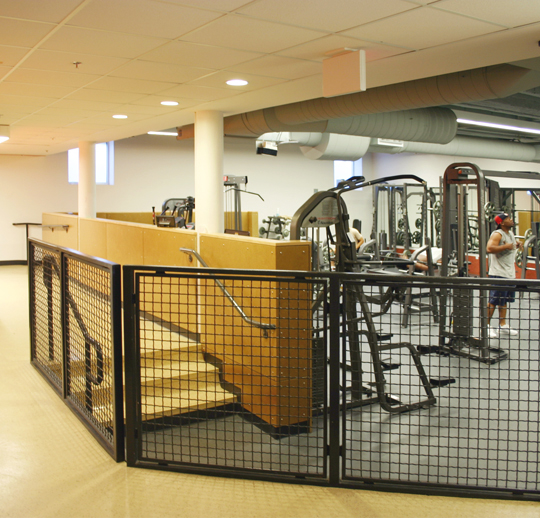
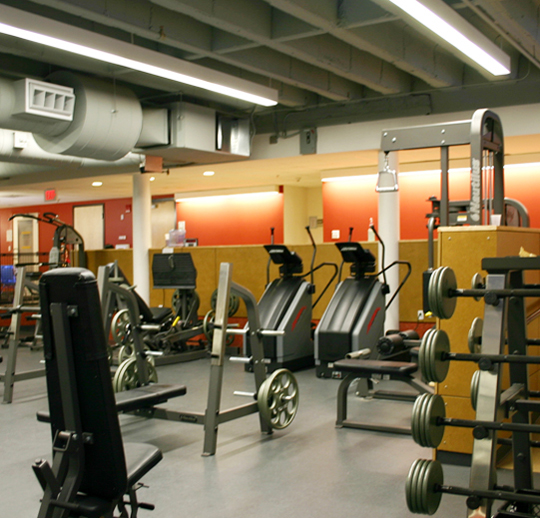
The population of downtown Providence has been changing over the last several years. New development has revitalized this neighborhood by creating loft apartments and artists’ studios within the former retail buildings. With this in mind, the local YMCA branch wished to consolidate operations and refocus programs to provide for modern fitness facilities, expanded child care, and administrative offices.

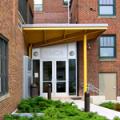
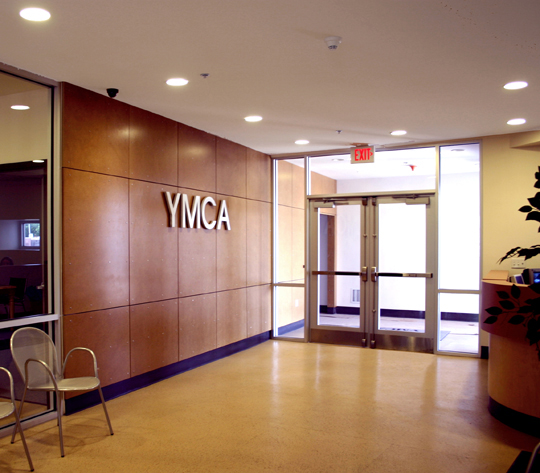
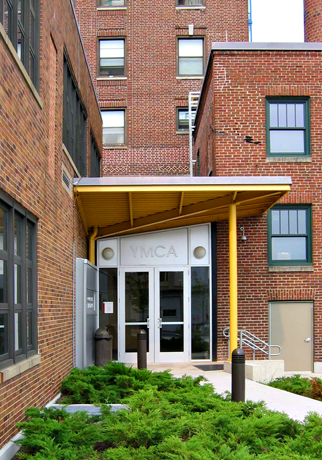
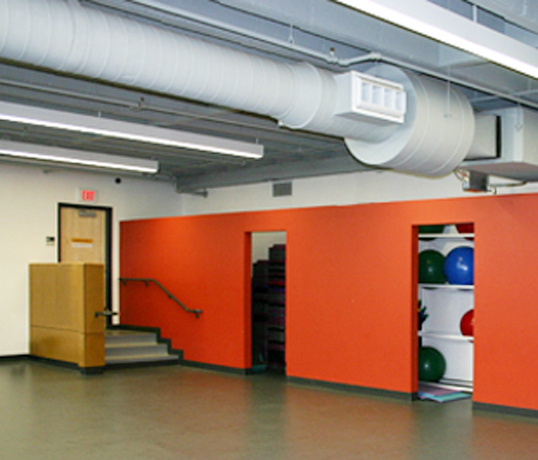
KITE successfully consolidated the YMCA’s operations within their portion of a tight urban lot. After gutting the entire three story structure, interior spaces were reorganized with a particular emphasis on providing greater openness between spaces. Using simple and durable finishes, four new child-care classrooms, a multi-purpose room, and fitness center (exercise room, aerobics room, steam room, locker rooms and showers) allow the YMCA to provide their clients with attractive, functional, and cost-efficient facilities. Site improvements include a new handicapped-accessible entrance and on-site parking.
St. John’s Episcopal Church

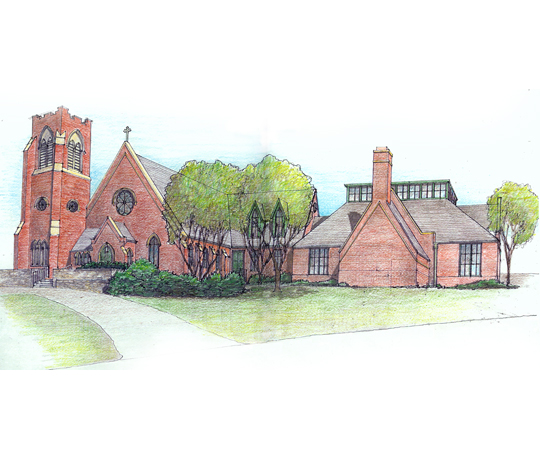
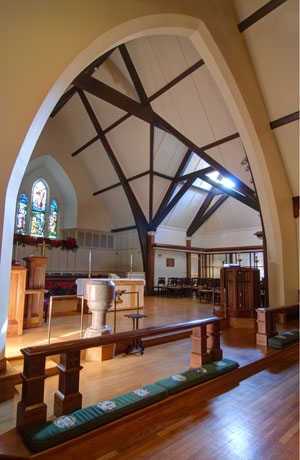
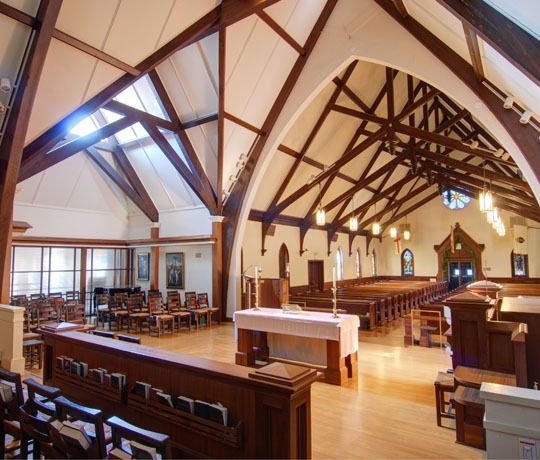
St John’s Church engaged KITE for the development of their property in Barrington, RI. The existing complex contained a church structure dating to the late 1800’s and an attached Parish Hall built in the 1950’s.

KITE was asked to develop alternate plans to illustrate how the Parish might better utilize the present facilities, increase the number of seats in the sanctuary, and add classrooms to the Parish House.

Working closely with the Rector and the Building Committee, KITE developed a series of design schemes to illustrate different options for enlargement of the sanctuary and enlargement of the Parish Hall, including the addition of a new Multi-Purpose Room and classroom wing. The architects made presentations to the Parish with question and answer sessions to gain consensus to the plans and discuss options.
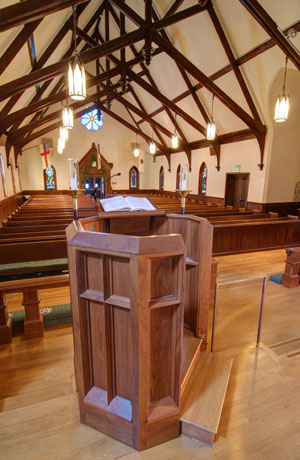
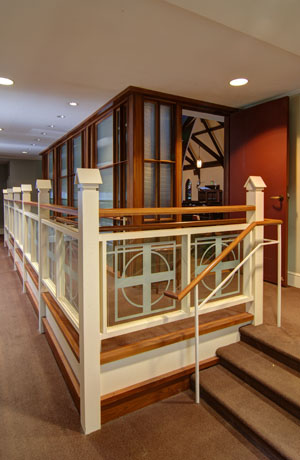
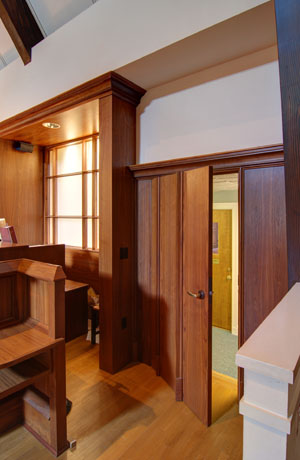
Phase 1 of the plan was executed in 2000. It increased the sanctuary seating to 400 and made all areas fully accessible for all people. Increased nave space is created through the addition of flexible space that serves as either a separate chapel or as auxiliary seating.
This space opens onto the altar area which contains a movable altar and pulpit arrangement permitting either a chapel orientation or a traditional full nave orientation. This flexibility has proven to be highly successful as its simplicity of change makes it practical and easily achievable on a regular basis.

101 North Main Street

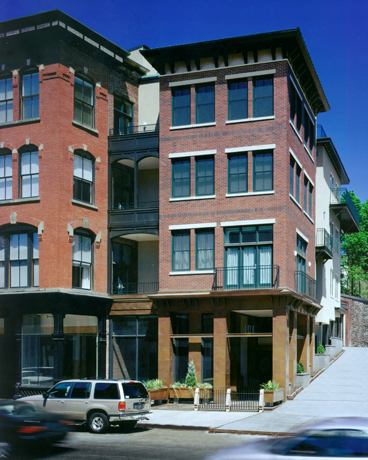
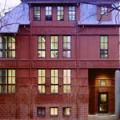
A developer acquired the former Pilgrim Mills Building for conversion to upscale condominiums.  While restoring the original building, KITE thoughtfully crafted a new four-story addition on the south side of the structure.  Utilizing a variety of forms and materials, the complex of buildings now reads as an assemblage of smaller scale structures, reflective of the original neighborhood and mid-block alley.

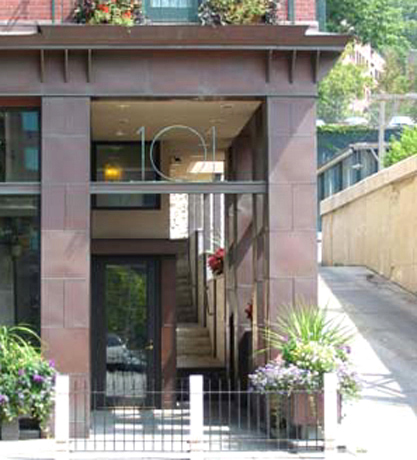
A common entry to the condominiums contains as elevator to all floors and provides access to the parking garage.  The original four-story building maintains its identity as the entrance to a new restaurant.  Each of the condominium units is unique in size and layout, ranging from one bedroom to two-floor penthouse units all with a private deck or balcony. The new units maintain the large windows and high ceilings of the original building, providing generous, light-filled living spaces.  The project serves as a skillful example of revitalizing a building and a streetscape.

David Brown Science Center, St. Andrew’s School

KITE developed a new master plan for St. Andrew’s Olmstead-designed campus that would allow the school to increase its overall student population by 50% and double its boarding student population.  To define the needs created by the expansion, the architects worked with students, parents, faculty, staff, and trustees in a series of “F.U.N.(Focus Users Needs) Sessions” to understand how the people who would use the facilities perceived their school and its future.

Following the masterplan, KITE designed the new Science Center to be sympathetic to the overall forms and scale of the existing campus buildings.  The Center is composed of a series of residential forms clad in cedar shingles that step down the hill meeting accessibility requirements without the use of an elevator.  The facility contains four classrooms (Biology, Chemistry, Physics, and Environmental Sciences), each with dedicated laboratory and teaching areas. Interiors contain exposed piping and are configured to provide views into the mechanical room, further reinforcing the teaching and understanding of the sciences.

Ample daylighting and a lively, nature-inspired color palette assure that there is no association with the typical staid science classroom.  A Greenhouse, Gardens, Wind Mill, and Solar Water Panels, illustrate practical examples of sustainability and everyday science to the students.

Ocean Technology Center, University of Rhode Island

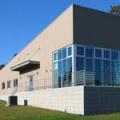
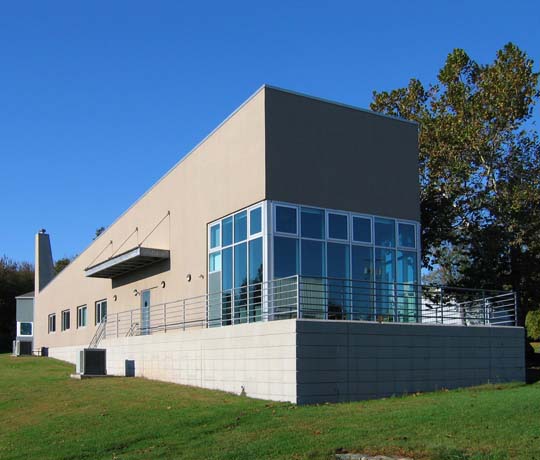
The Ocean Technology Center’’s (OTC) mission is to perform basic and applied research of interest to the corporate and government agencies that make up the National Science Foundations’ membership. The program included administrative offices, a large conference room and flexible office space for start-up industries in the ocean technology field coupled with a laboratory/workshop for the production of prototype marine equipment. Among the research groups currently using the building, undersea archeologists working with Dr. Robert Ballard use the facility for development of advanced undersea vehicles and expedition documentation.

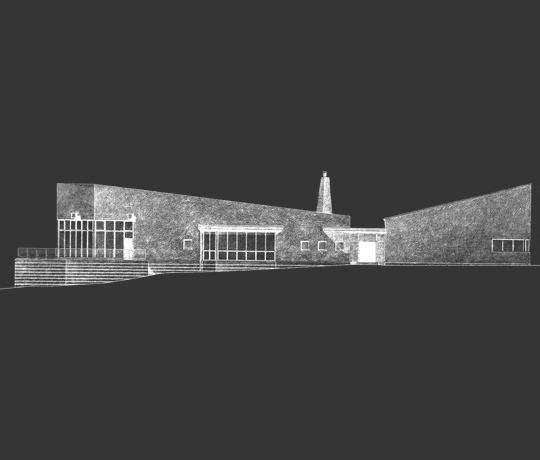
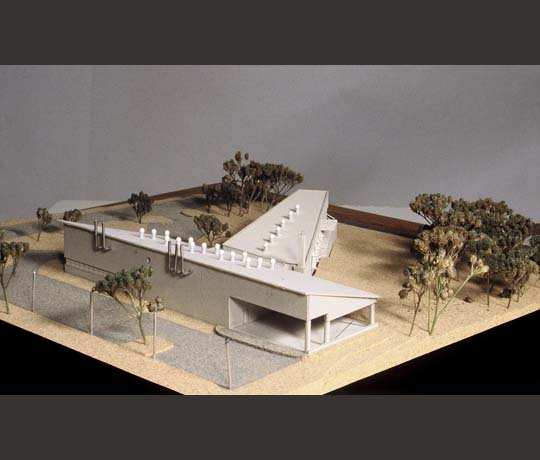
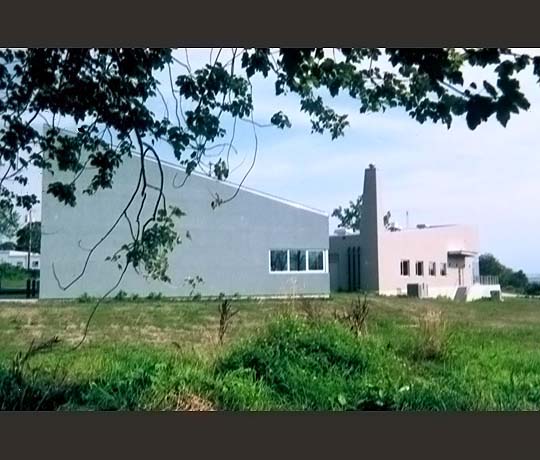
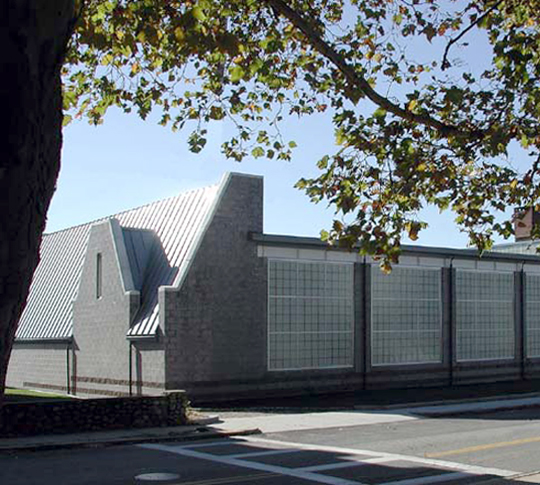
The design separates the program into two types of space: office and laboratory. Each is contained under similar shed-like roofs and made unique with its pattern of glazing and contrasting stucco colors. The building is sited to take maximum advantage of views to Narragansett Bay, with the laboratory behind the offices and higher up the slope. The resulting architecture is both modern and industrial in appearance. A number of funding sources required the architects to work with a limited time frame and a modest budget.

KITE has completed a master plan study which proposed doubling the size of the existing building, to provide additional office, laboratory/work, and conference/work areas. The addition continues the modest forms and simple materials.

Old Kent County Courthouse / East Greenwich Town Hall

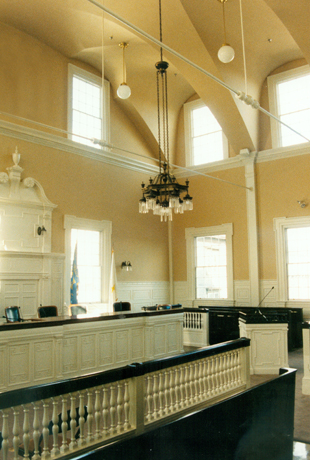
Originally constructed in 1806, and one of Rhode Island’s original state houses, the Town of East Greenwich asked KITE to fully restore the historic Kent County Courthouse building as well as house new offices for the Town of East Greenwich.

A new addition was constructed which was separated from the original building by a glass connector. Another challenge was to make the building fully accessible on this steeply sloping site from the commercial area of Main Street to Peirce Street, an area of mixed historical and public buildings. A drive at Courthouse Lane passes through the addition to allow parking at an interior courtyard. An accessible route from Peirce Street is provided via a covered walkway.

Department of Mathematics Building, Brown University

The Department of Mathematics had outgrown their existing facilities, a 19th Century wood framed house with a 1980’s brick addition on a prominent urban corner. Brown University engaged KITE to reorganize the existing space and provide new construction on the limited remaining buildable lot.

The first floor was completely reorganized with an emphasis on improving internal circulation and functional efficiency. Responding to the scale and forms of the residential campus, new construction is intended to visually separate the historic house from the rest of the complex. KITE provided offices for 30 faculty members and 40 graduate students, as well as administration, conference and seminar rooms, and common meeting space. The existing lecture hall remains as an independent space, isolated from other Math Department facilities in order to be used by the entire university community.

Westerly/Pawcatuck YMCA

Located in a residential neighborhood adjacent to Wilcox Park and the central business district, the YMCA is an important part of life for many residents in the twin cities of Westerly, Rhode Island and Pawcatuck, Connecticut.

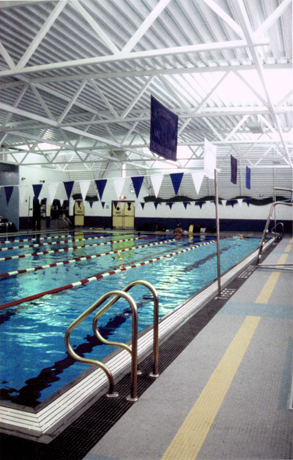
To contain the new program areas, KITE created residential scale additions that complement the existing 1960’s moderne building. A natatorium with a six-lane, 25-yard swimming pool and an accessible locker room anchor the north end of the site, while a thirty child nursery school is on the south.
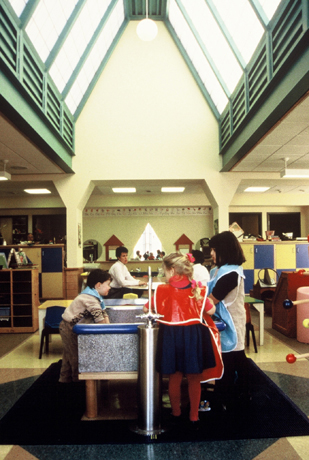
Color and scale have been used to create child-friendly environments within the overall complex, while translucent, energy-efficient acrylic panels provide natural illumination and enhance the quality of the spaces in the new construction.

Great Island Residence

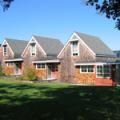
Set in the fragile environment of the Cape Cod coast, this vacation house for a busy executive couple with a large, multi-generational family presented an ambitious program. It had to provide comfortable living space for one, two, or many; to integrate interior and exterior spaces both physically and visually; and to emerge gently from the scrub-growth surrounded dunes.

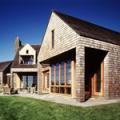
KITE’s solution provided a group of familiar shingled, gable-roof pavilions informally arranged and linked by transparent flat-roof connectors that form a cohesive whole whether viewed from the land or the sea. Mahogany windows, doors, and trim are stained a transparent red to give an energizing splash of color against the time-honored silver-grey of the weathered cedar shingles. The organization of space allows both for an intimate experience for the couple in two adjacent pavilions and for large gatherings in the interior and exterior spaces that extend from them. Simple detailing inside and out reinforce the clarity of the program. While the compound evokes the ad-hoc qualities of rural houses in southern New England, the vigorous massing and crisp detail distinguish this as a strikingly modern yet timeless composition.

School of Architecture, Roger Williams College

Conceived to provide a new home and department identity for a rapidly growing part of the school’s curriculum, this design was the winning entry in a national design competition that attracted an impressive array of entrants.

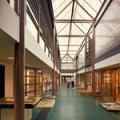
The design concept developed around a long, skylit central spine flanked on one side by administrative spaces on one side and linked design studios, stepped to reflect the challenges and natural attrition in each year of the program, on the other. A common gathering space and the department library terminate the ends of this linear two-story gallery. The architectural response to the program produced spaces where interchange is abundant and frequent among the faculty, staff, and students; materials that are durable; and construction techniques and building systems that are exposed and instructive.