Category Archives: Archives

School of Social Work, Rhode Island College

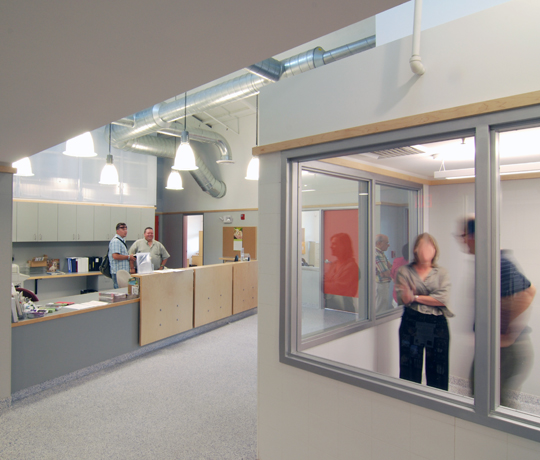
School of Social Work is an expanding presence at Rhode Island College that has grown to offer Bachelor and Master of Social Work degrees to over 375 students. Formerly occupied by the Rhode Island Department of Children, Youth, and Families, “Building No. 9” was chosen as the new home for the School and its associates Institutes.

The existing building included a derelict central exterior courtyard and a partial basement, providing approximately 24,000 square feet of enclosed space. KITE chose to work entirely within the existing building, utilizing existing partitions wherever possible to conserve construction funds in a constrained budget.

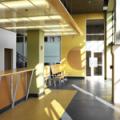
The defining feature of the Project is the central lobby, created by enclosing the existing courtyard with a new glazed shed roof. This “found space” provides gathering place for faculty and students that fosters a sense of community and encourages spontaneous socializing and unprogrammed learning opportunities. New “smart” technology classrooms and computer labs augment 34 faculty offices and dean’s suite.
Crossroads RI

Crossroads RI, a rapidly growing social service agency, acquired a large underutilized downtown YMCA and challenged KITE to re-identify this dilapidated landmark structure and treat the clientele with the architectural respect and dignity that will lead them back to self-sufficiency and ultimately contributing membership in the community.

Previous significant alterations to exterior features and interior spaces increased the potential both to create a new image for the building and to accommodate an ambitious program. Newly created spaces provide education, counseling, and health services for clients, office and support space for staff and volunteers, and rental apartments for disadvantaged persons. The high-intensity program required rigorous differentiation of space for the safety of clients and staff, a cheerful atmosphere for easing stressful situations, durable materials for heavy use and ease of maintenance, and adherence to a modest budget.

KITE’s design orchestrates the space into rational and accessible, yet separated areas that allow families, adolescents, and adults to receive program-specific services without potentially dangerous overlaps or unnecessary feeling of compartmentalization. Color and material are employed to de-emphasize those spaces’ institutional qualities.

Offices of KITE Architects, Rising Sun Mills

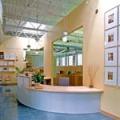
This 3,500 square foot, free-standing building with street frontage offered everything that KITE could have asked for – open studio space, large windows, and high ceilings. In order to emphasize the collaborative nature of the working process, spaces are kept open. In fact, less than 10% of the space is enclosed for toilet rooms, storage, and private conferences. The remaining space has been cleverly articulated by the controlled placement of two folding wall planes that wind around the studio and free-standing millwork work stations.

Carefully crafting the interiors as a total environment, the architects at KITE designed their own custom-built furniture, including workstations, library shelving, reception desk, work tables, and conference tables. The result is a showcase that exemplifies KITE’s unique sense of space, material, light, and attention to detail.

As an example of how sustainable design is integrated into KITE’s approach, the office features copious but balanced daylight, mechanical systems that maximize outside air use, and environmentally responsible finishes such as worktop surfaces made from Marmoleum (made from linseed oil) and recycled MDF furniture surfaces. KITE’s commitment to building strong and diverse urban neighborhoods that reuse existing buildings and infrastructure and are both pedestrian and transit friendly is demonstrated by the choice to locate in the historic mill district of Olneyville.

Green Company Headquarters

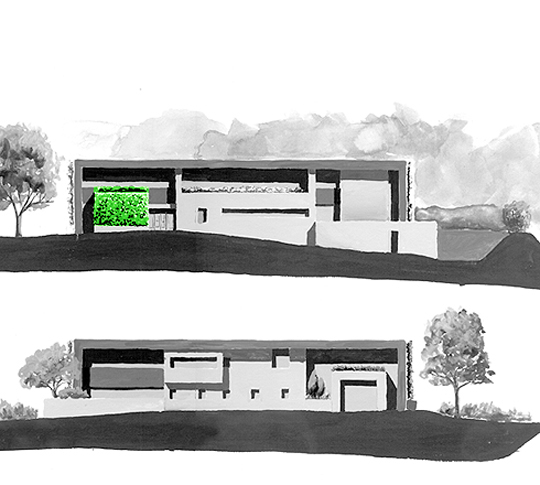
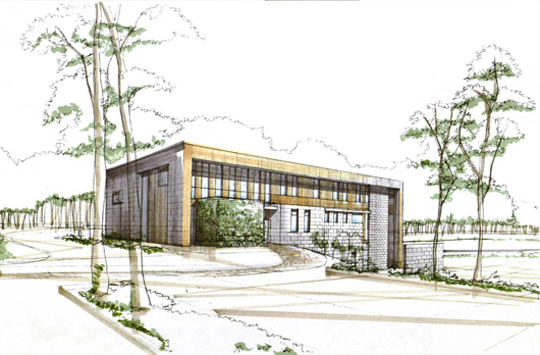
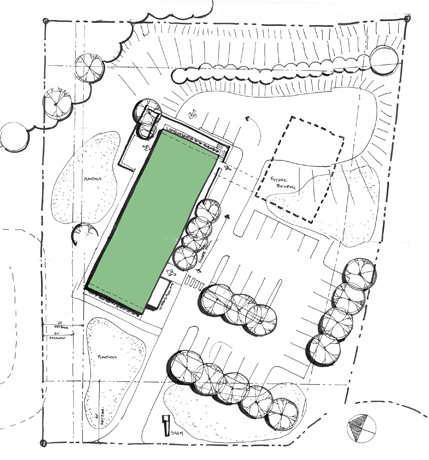
Designed to meet LEED Silver criteria and registered with the US Green Building Council, this proposal for new office building housing the headquarters for a growing construction firm reflect their dedication to quality construction and providing a positive work environment for their staff while demonstrating their capacity and comittment to green building technology.

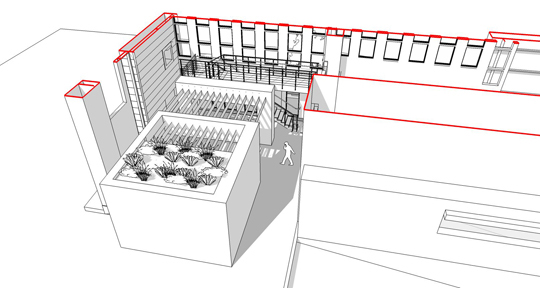
The design starts with a series of box-like forms that intersect a simple rectangular volume, creating spatial variety and reflecting the functions within.  An emphasis on views and transparency through spaces and along various axes carries a sense of light and playful exploration of space throughout the interiors.  A variety of structural, functional, environmental factors drive the ultimate form of the building.  The size and pattern of the window openings is driven by the lightweight bearing wall construction.  The deep overhang on the south facade sheilds upper level offices, while more opaque forms occupy the lower level and shield storage and other utility areas.  The orientation of the building along the east-west axis enables 100% of occupied spaces to enjoy ample daylight.

The interior lobby space provides a dramatic entry and yet houses a comfortable conference area through careful manipulation of light and volumes.  Recognizing that glare and acoustic control are important issues, the conference area inhabits a sheltered volume within the larger atrium.

Innovative features include proposals for a refrigerant-based geothermal well for cooling and a passive chilled-beam hydronic system.  Proposed materials include a rain-screen style fiber cement panel system and reclaimed redwood siding salvaged from local sources.  An area of green roof provides a demonstration case study, and the landscape is designed to reduce stormwater runoff, reuse roof drainage to sustain planting beds, and use native New England plantings to encourage habitats.

East Greenwich Outdoor Living

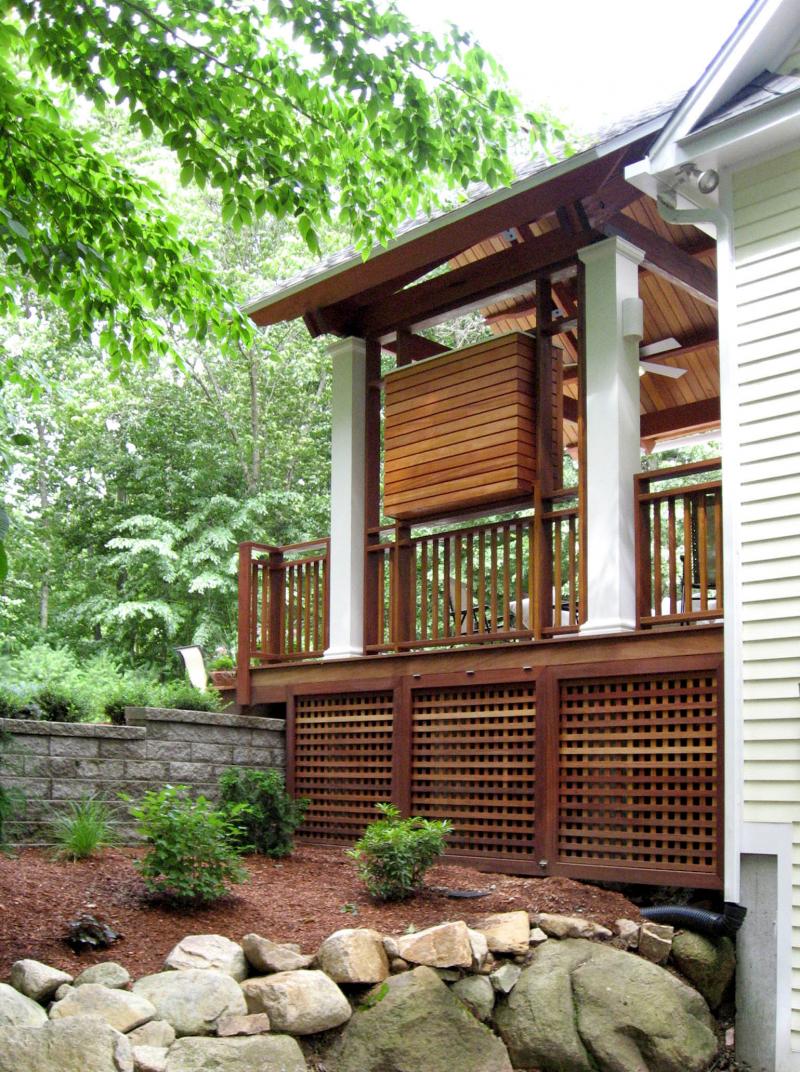
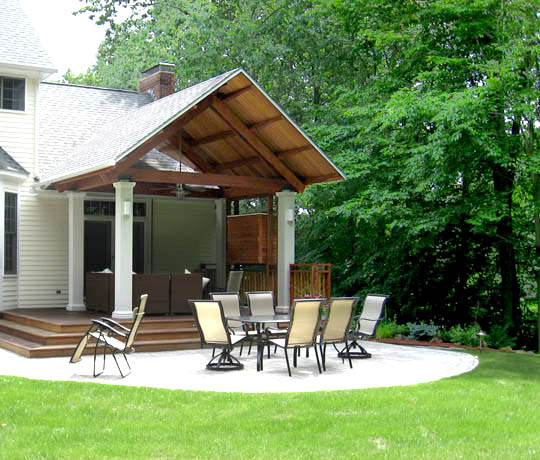
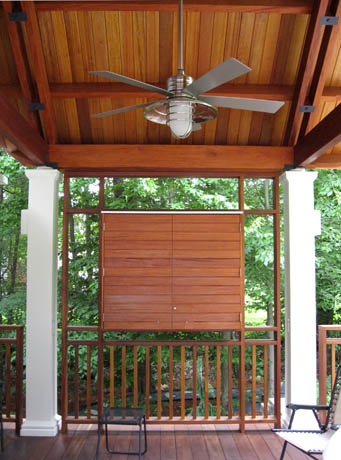
This new covered porch and patio was envisioned as a living room to allow this growing family to enjoy their large wooded yard as a primary living space throughout the warm months.

Using the beauty of exposed mahogany, the simple form of the floating roof fits well with the existing traditional home yet the expressive exposed structure displays an intricate level of craftsmanship. A specially designed cabinet and screen wall allows the family to enjoy television and sporting events while grilling and socializing.

Stand Up For Animals

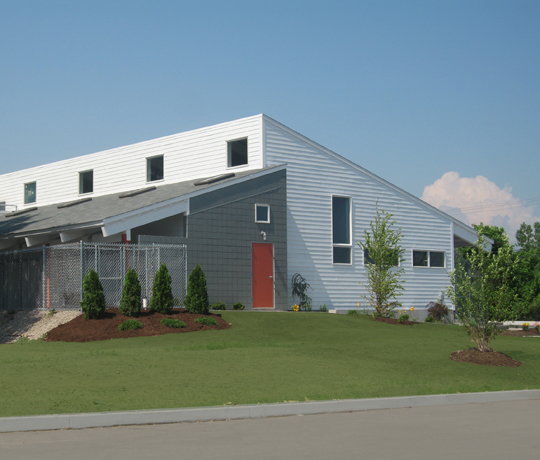
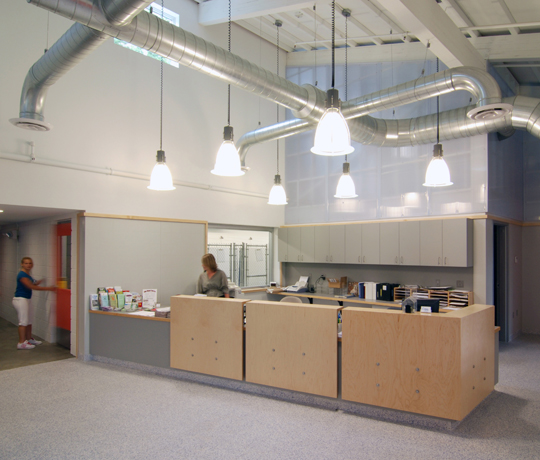
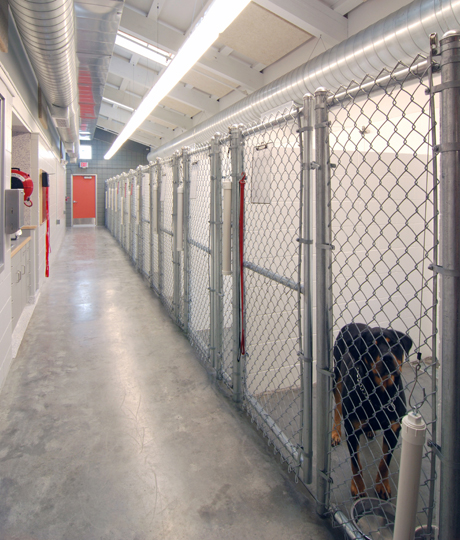
Stand Up For Animals has worked with KITE to create their brand new facilities to shelter dogs, cats and small animals in Westerly, RI.

Stand Up For Animal’s vision is to create a place where animals will be treated with compassion and dignity; where suffering and abuse will not be tolerated; where education and understanding will play an integral role in eliminating overpopulation, animal cruelty and abandonment; where every possible effort is made to return an animal to its owner, or to place that animal in a new, safe and loving home.

Conceived with highly economical yet durable materials, the building creates a comfortable haven with generous natural daylight through transoms and skylights. Protected outdoor areas are provided for all the animals, and a high-volume ventilation system that uses ample amounts of outside air. At 7,000 square feet, the building also provides community meeting space.

Frazier Terrace, RISD

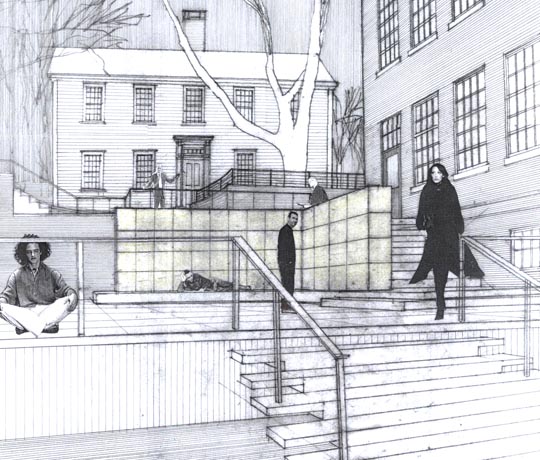
This proposal for a new stair for the Rhode Island School of Design’s Frazier Terrace on Benefit Street in Providence would provide new gathering space and resolve numerous circulation issues between uphill areas of RISD’s urban campus and the new Chace Center.  Designed with luminous panels suspended on a lightweight modular steel frame, LED lighting would efficiently illuminate the walkway for safe passage.

Lincoln Residence II

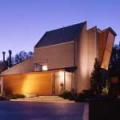
Set within a cul-de-sac development and bounded by large, mixed quality two-story houses, agricultural land, and a mature deciduous woods, the challenge was to produce a home of minimal maintenance construction, abundant natural light, openness between spaces and exacting precision with all aspects of the construction. The design strives to capture the Owner’s passion for modern architecture and contemporary design.

The plan has been distilled to contain discrete spaces for parents and children that effortlessly reconnect for shared activities while maintaining a high degree of privacy from the street. Traditional New England forms and materials – shed roofs, masonry, copper, and wood siding – are juxtaposed with terrazzo, stainless steel, and glass, to a powerfully contemporary effect and proudly left in their natural state.

A very close working relationship was developed with the craftsmen executing the work. The outcome is a serene, highly contained and introspective design that carefully focuses on the needs of the family that dwells within, while stimulating the observer.

Icon Cafe

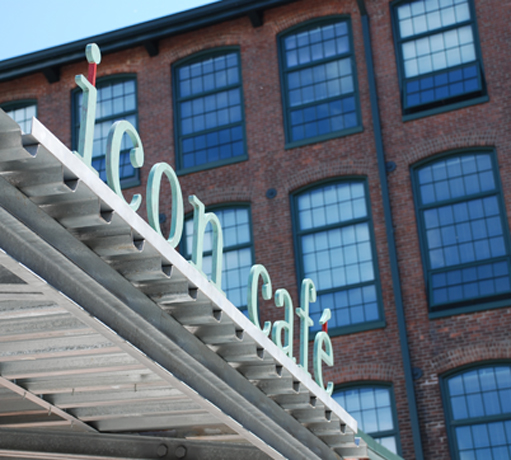
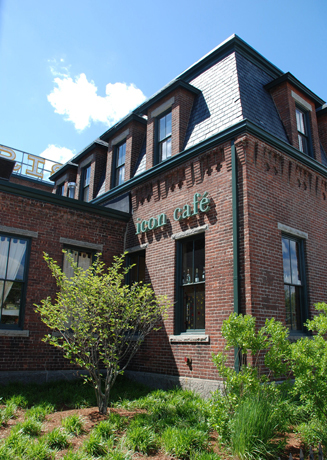
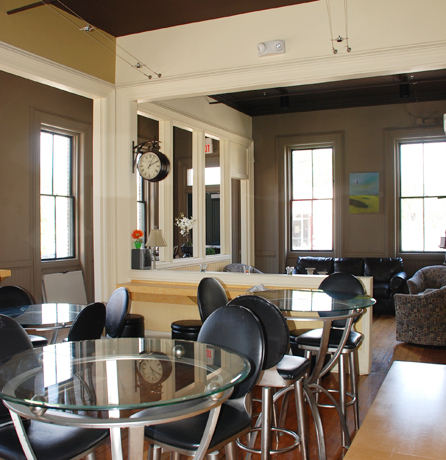
Designed by KITE, Icon Cafe at Rising Sun Mills on Valley Street in Providence was named the “Best New Cafe” by the editors of Rhode Island Monthly Magazine.

As designer for the cafe interiors and exterior renovations of “Building 10”, Sarah Kennedy of KITE created a rich palette of color, material, and lighting that lets the original building’s historic character shine through.

Agawam Hunt Club

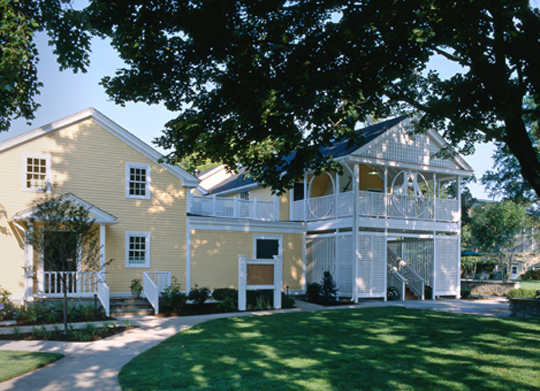
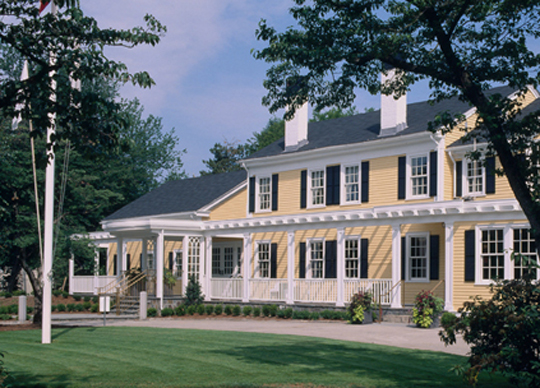
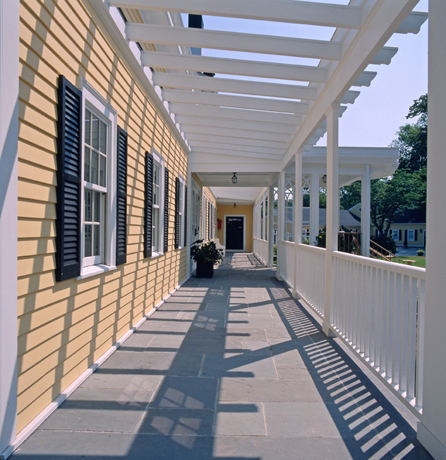
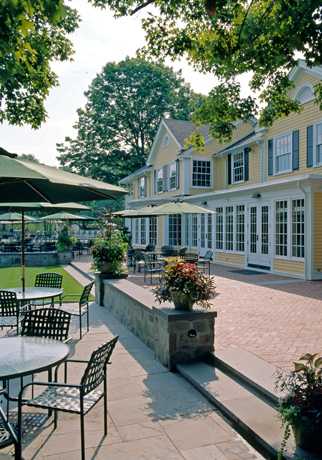
Established in 1893, Agawam Hunt is the oldest country club in Rhode Island. Since that time the original converted farmhouse has evolved into a clapboard-clad picturesque accumulation of additions in the domestic vernacular manner. In 2003, Agawam Hunt engaged KITE to address several building and fire code deficiencies, make the building more physically accessible, perform a complete modernization of the kitchen, and correct decades of damage caused by deferred maintenance. Together, all of these threatened the building’s viability.

The challenge with the renovations and additions to the clubhouse was to balance all of the modern needs and code requirements with the goal of preserving this important piece of Rhode Island history. Working closely with Agawam Hunt, several subtle renovations were developed that allowed the club to solve each of the issues while respecting its history and maintaining the character that the members had come to cherish.

A new stair tower, a series of terraced patios, and an interior corridor were created to address the exiting needs while maintaining the appearance of the clubís natural evolution. New landscape elements have been used to integrate the ADA-compliant building approach and the addition as well as enhance the grounds. Working with the interior designer, new finishes have been installed that refresh the interiors. Structural, mechanical, and electrical improvements have been made to ensure that the club will be enjoyed by generations to come.