Author Archives: admin

NBC Field’s Point Administration Building

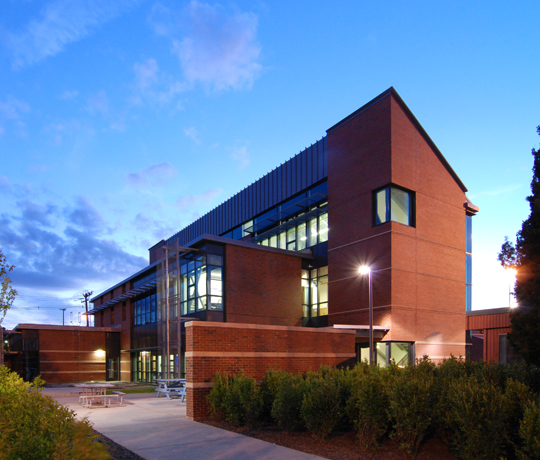
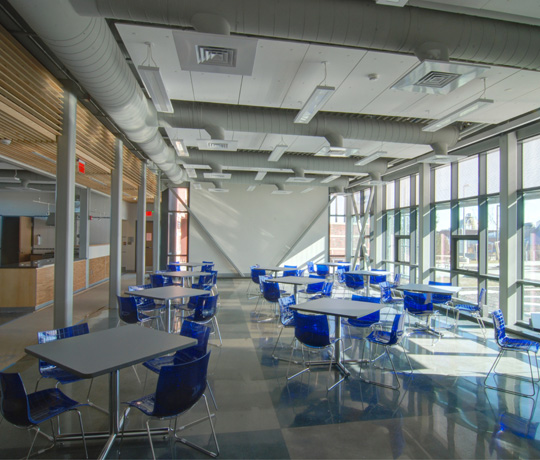
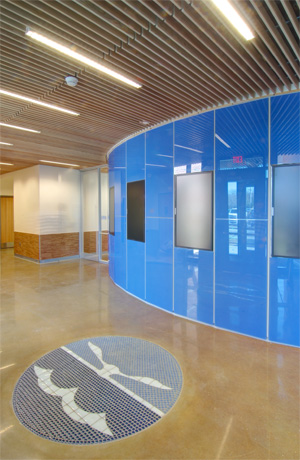
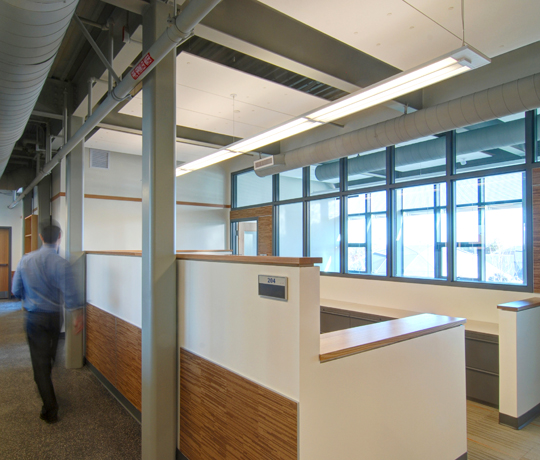
KITE has completed a new Adminstration Building for the Narragansett Bay Commission, Field’s Point Wastewater Treatment Facility. The 19,000 sf Operations Building houses a complex program that balances treatment plant process monitoring, plant security, plant staff support areas, administrative offices and an education center that is open to the general public. The project was part of a larger effort that won the 2014 CMMA New England Infrastructure Project of the Year award in the largest category (<$100M).

When completed, the education center will be used as a public teaching facility to heighten community awareness of water-use and conservation issues that face the Narragansett Bay. The education center is surrounded by rain gardens that demonstrate stormwater management strategies, and the use of drought resistant native plant communities. The lower floors of the building house various plant staff support areas including a new locker room facilities, a lunchroom, and kitchen areas. A third floor fitness center overlooks green roof terraces and the plant beyond.

The building is targeting LEED Gold Level Certification. Green roof terraces, low-e glazing, solar shading devices, and materials with high-recycled content are some of the key green design features. Building interiors highlight exposed structural elements and building systems, and reflect the raw beauty and robust industrial vocabulary of the Field’s Point Site. A palette of materials has been selected that is durable, low maintenance, and naturally beautiful.

photography by Albert Garcia, AIA
Prospect Street Residence

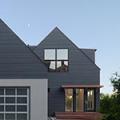
This major renovation is the perfect illustration of how KITE’s creative yet careful approach can transform even the most challenging structure into a gem. The resulting aesthetic is clean, modern, and elegant, yet approachable and contextually appropriate for its historic College Hill neighborhood.

The original residence can be best classified as “1970’s-contemporary”. At the start of the project, views to and from the residence were mostly obscured by overgrown plantings along Prospect Street and Angell Street. A key challenge was to brighten the darkened spaces and finishes.
Renovations transformed the existing structure into a new residence that is in keeping with the quality and character of the surrounding neighborhood, while maintaining the overall modern spirit of the original residence.

Exterior renovations include new cladding and windows, and a palette of materials drawn from the surrounding college hill neighborhood. Horizontal sapele wood siding replaces the existing vertical wood siding on the major volumes of the house. The minor volume defined by the garage that faces Olive Street is stucco clad to reflect the stone textures of the existing perimeter foundation wall. The site design and interior renovations improve the visibility and access to the “front door” located at the NW corner of the house.

Inside, KITE took a similar approach by enhancing the qualities of the existing floor plan and introducing subtle changes. The new open floor plan was designed to accommodate the family’s art, book, and media collection. A dramatic new stair organizes the space of the completely open plan.

Girl Scouts of Rhode Island

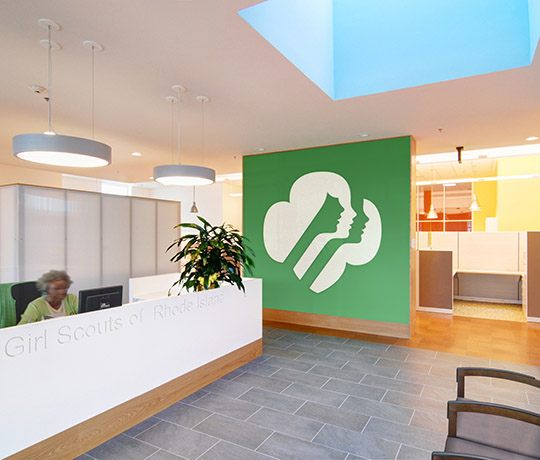
KITE has designed a new headquarters for the Girl Scouts of Rhode Island that reflects the spirit of the thriving organization. The renovation includes a complete reworking of a former retail space in an existing building.

KITE helped stretched a limited budget to maximum effect by limiting new openings in the formerly windowless building.Through strategic use of skylights, materials, color, and maximizing views within the space, a fresh and lively atmosphere is created.

KITE also used the opportunity to conduct design workshops with Girl Scouts from across the state. Project lead Carrie Patricio started the day-long session by explaining what an architect does, then the girls broke into small groups to suggest design ideas for the space using ‘inspiration boards’. The scouts then had a chance to present their ideas to the group, much like the architects at KITE do every day, only the scouts earned a Public Speaking badge! The day generated a lot of great ideas and excitement for the new space.

Vedanta Society

KITE’s design for a major addition for the Vedanta Society has created new worship space, seminar facilities, offices, and lodging for visiting scholars and guests. The design references the cultrual roots of the worship and study community and gives the building a unique identity reflecting its long history in Providence.

Located on a major historic street in Providence on College Hill, the design started with a scale and massing that is intended to respect its institutional and residential neighbors and create a street edge compatible with the walkable community.

An eye to energy efficiency and cost effective yet durable materials is an important factor. Features such as a green area with sunscreens and deep overhangs provide a tranquil garden area within a very tight urban site, and also reduce cooling loads in the summer.

The project started with investigations into alternatives and long-term needs of the Society. A ceremonial groundbreaking led by Swami Yogatmananda invited numerous community spiritual leaders from a variety of faiths to participate in a celebration of this endeavor and was completed on schedule in early 2012 thanks to the hard work of TRAC Builders.

Photographs by Warren Jagger

The Knickerbocker Cafe

KITE is pleased to announce they are working on the revitalization of the legendary jazz venue The Knickerbocker Cafe, and new life as a center for music education and heritage showcase. Stay tuned for more details of this exciting endeavor!

Mid-Century Modern Residence

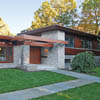
Maintaining the overall spirit of this 1950s modern house on Providence’s East Side was KITE’s primary intent in recent renovations.

The original horizontal mahogany siding on the house was in excellent shape, but other exterior details had either been compromised or replaced over the course of the house’s history. The updating of the exterior involved research on the original design, and developing a palette of warm materials to complement the refinished mahogany siding.

The result was part restoration and part renovation, in which contemporary detailing and natural materials (copper, granite ledge stone, new steel windows) were used to highlight the latent richness of the mid-century design. The architects reconfigured the front entry area to create a smoother transition between the sidewalk and the house interior.

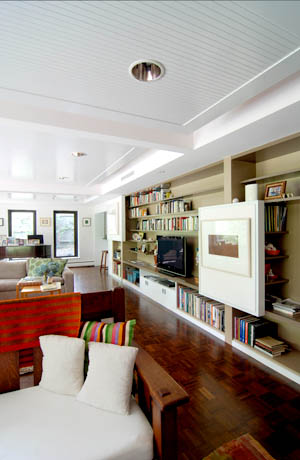
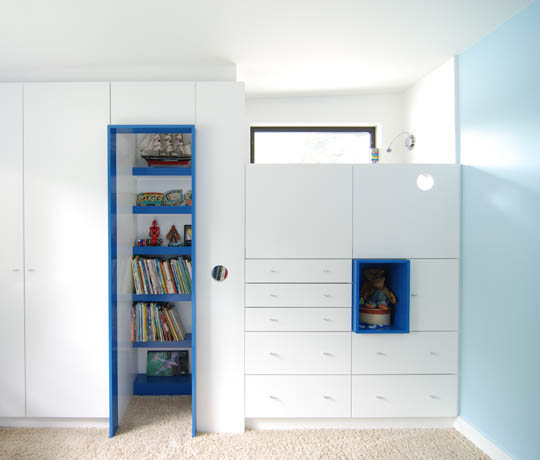
Inside, the architects took a similar approach by enhancing the qualities of the existing floor plan and introducing subtle changes. The new built-in woodwork in the family room was designed to accommodate the family’s art, book, and media collection. Several bedrooms were reconceived through carefully detailed millwork interventions.

All of the design changes work together to provide a better performing, fresher looking, and contemporary update to an already significant mid-century modern home.

S.W.E.L.L (Shop Work Eat Live Local), 1577 Westminster St

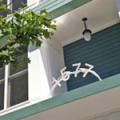
1577 Westminster Street is sustainable not only for its conservation of resources, but for the way it embodies a holistic approach to development. It adds community participation, a healthy food chain, social equity, affordability, and sensitive urban form-making to technical and siting concerns.

Westminster Street on Providence’s West Side was once lined with elegant large mansions, but by the mid-1980’s, many had disappeared and replaced with ugly single-story automotive buildings or abandoned lots. Replacing one of those lots, this new construction urban infill mixed-use project has become a vibrant symbol of positive community action and reflects the historic neighborhood’s caring and off-beat spirit.

The West Broadway Neighborhood Association (WBNA) decided to set an example for responsible, sustainable development that enhanced the neighborhood. They created a neighbor-juried design competition for their first new construction development which the architects won by popular vote in 2004. Over the next 8 years, numerous financial and logistical setbacks were overcome through a combination of willpower, dedication, and vision by the entire project team and community supporters.

The architects were responsible for design of the building and site, planning and implementing green measures, as well as intensive coordination with engineers, funders, community groups, regulators, contractors, artisans, and volunteers.

The ground floor was created as a retail incubator grocery space for healthy, local food to address the “food desert” on the West Side. The resulting Fertile Underground has become a popular neighborhood hub, providing not only fresh produce but organic staples, a deli, and events.

WBNA partnered with Spurwink RI, who provides housing for adults with developmental disabilities, to create seven one-bedroom apartments upstairs with a common room. They recognized a unique opportunity to engage their residents with the community.

The design takes its cues from its Victorian neighbors on massing, height, and scale, yet re-interprets a traditional mansard form with modern moves and detailing. A driving factor for the design was the project’s demonstration of the newly created West Side Overlay District, which the WBNA had helped write.

The shoestring budget meant that resourcefulness was the determining factor to all decisions, so the design team developed a custom “Green Plan” in absence of funding for third party certification. The Green Plan kept a running prioritized list during design to keep resources focused on getting the most ‘bang for the buck’, and took full advantage of nearly free strategies from south-facing windows with deep overhangs and a natural ventilation shaft, to an old-fashioned drywell to mitigate stormwater. Strategies such as high-performance insulation and a 95% AFUE boiler paid off when the project was tested with a Energy StarHomes HERS Index of 60, which means it uses 40% less energy than a home built even to today’s stringent energy codes.

Factory Expansion

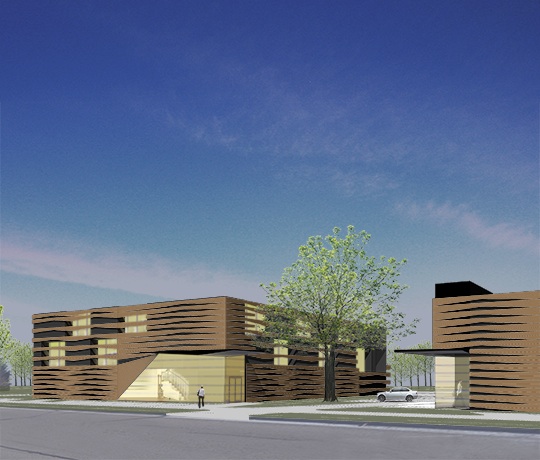
KITE explored this design direction for a fast growing manufacturing company who needed additional space by both adding to their existing facility and creating new construction to house separate administrative offices.

Creating a new image appropriate for the progressive company on an aggressive timetable and with economical construction were key priorities. KITE proposed a cladding system that used inexpensive rainscreen system as a way of quickly and inexpensively re-imaging the existing building and tying it to the new building.

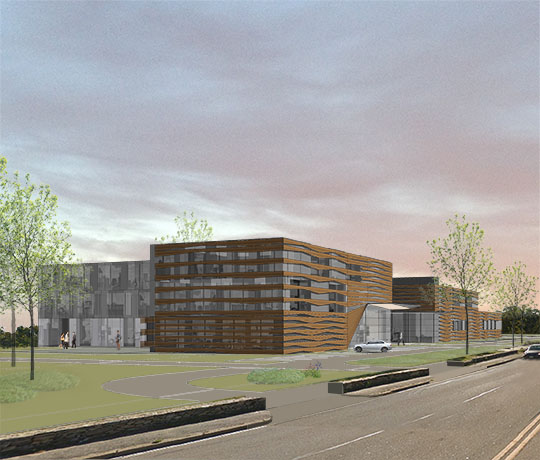
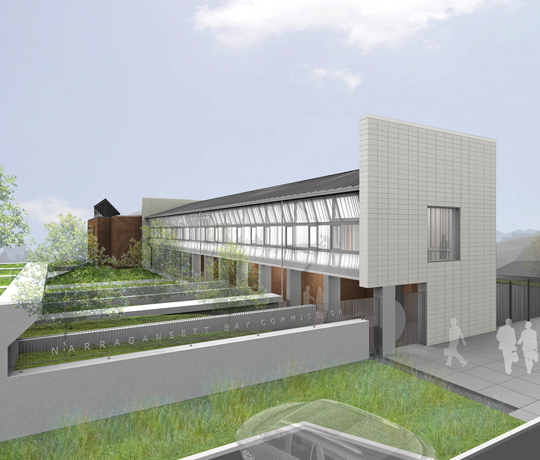
Narragansett Bay Commission Operations Building Addition & Renovation

In 2007, KITE completed a comprehensive Master Plan Study for the Narragansett Bay Commission Field’s Point Water Treatment Facility. An interactive and thorough programming process addressed the unique needs of each department including: Plant Operations and Maintenance, Pretreatment, Environmental Monitoring and Data Analysis (EMDA) Offices and Laboratory.

The first phase of the Master Plan included a 16,000 sf renovation and 7,000 sf addition to an existing operations building. The project houses the treatment plant control room, administrative offices, lunchroom and locker room facility. For the design of the EMDA Laboratory, KITE worked closely with NBC engineers, scientists and technicians, to develop optimal lab areas for water sampling and analysis. The design integrated state of the art HVAC systems and controls. Materials and finishes were proposed to provide optimum levels of chemical resistance and durability.

The site is designed to maximize reuse of existing site materials such as existing asphalt paving and concrete structures. Existing abandoned concrete ash tanks are reused as large planting beds that demonstrate technologies for controlling storm water and improving water quality. The use of native coastal plant communities minimize irrigation and maintenance requirements, and create a green oasis in the midst of an industrial landscape.

This proposed design was ultimately superseded by plans for new construction which was designed by KITE and completed in 2013.

Lippitt Hall, University of Rhode Island

Built in 1897, Lippitt Hall is one of the oldest buildings on URI’s Kingston campus and occupies a prominent position on the Olmstead designed Quadrangle. Originally constructed as an academic building and drill hall, additions and renovations over the years had compromised its grandeur. KITE was selected as the architects for the complete interior and exterior overhaul based on their ability to add new life to historic structures and technical expertise.

Involving a complete reimagining and renovation of the interior for academic programs, new spaces reveal the original timber structure and dramatic oriel windows. The building is the new home of the Department of Mathematics and the Honors Program, providing 36 faculty offices, 18 graduate student offices, and a variety of technology classrooms and collaborative learning spaces.

The historic exterior has been restored using the highest standards, including thermally improved windows, complete replacement of the slate roof, and rehabilitation of the stone and wood wall materials.

Improvements to the interior employ a light touch and reintroduce the delight of the original multi-story drill hall volume and exposed structure, as well as make the building accessible, address code deficiencies, and improve user comfort by replacing existing heating and cooling systems.